Research on Areca Nut (“Tamol”) and Oral Cancer Risk
important role in the progress for oral squamous cell carcinoma (OSCC). A lesser-known risk factor of OSCC in India is the widespread consumption of areca nut, locally called in Assam “Tamol”. This practice of chewing raw betel nut in combination with ingredients such as lime and betel leaf varies in intensity among individuals. The betel- quid used in northeast India especially in Assam is also a traditional offering to the guests and generally the last item at the end of the meal. Dr.Unni’s research team identified the potential risk of areca nut (“Tamol”) chewing ,and the incidence of OSCC in areca nut chewer’s population based on saliva sample and consideration of different aspects of pathogenesis of OSSC. The results reveal that the salivary biomarker can be used to assist between biopsies to aid in supervision of the disease's status, and also appeals as widespread research in the future. Oral exfoliative cytology and Cyto-morphological analysis can serve as an important screening procedure for the early diagnosis before processing to high-tech and expensive procedures. Dr.Unni and his team also observed that the salivary protein variation has a positive association with OSCC development.
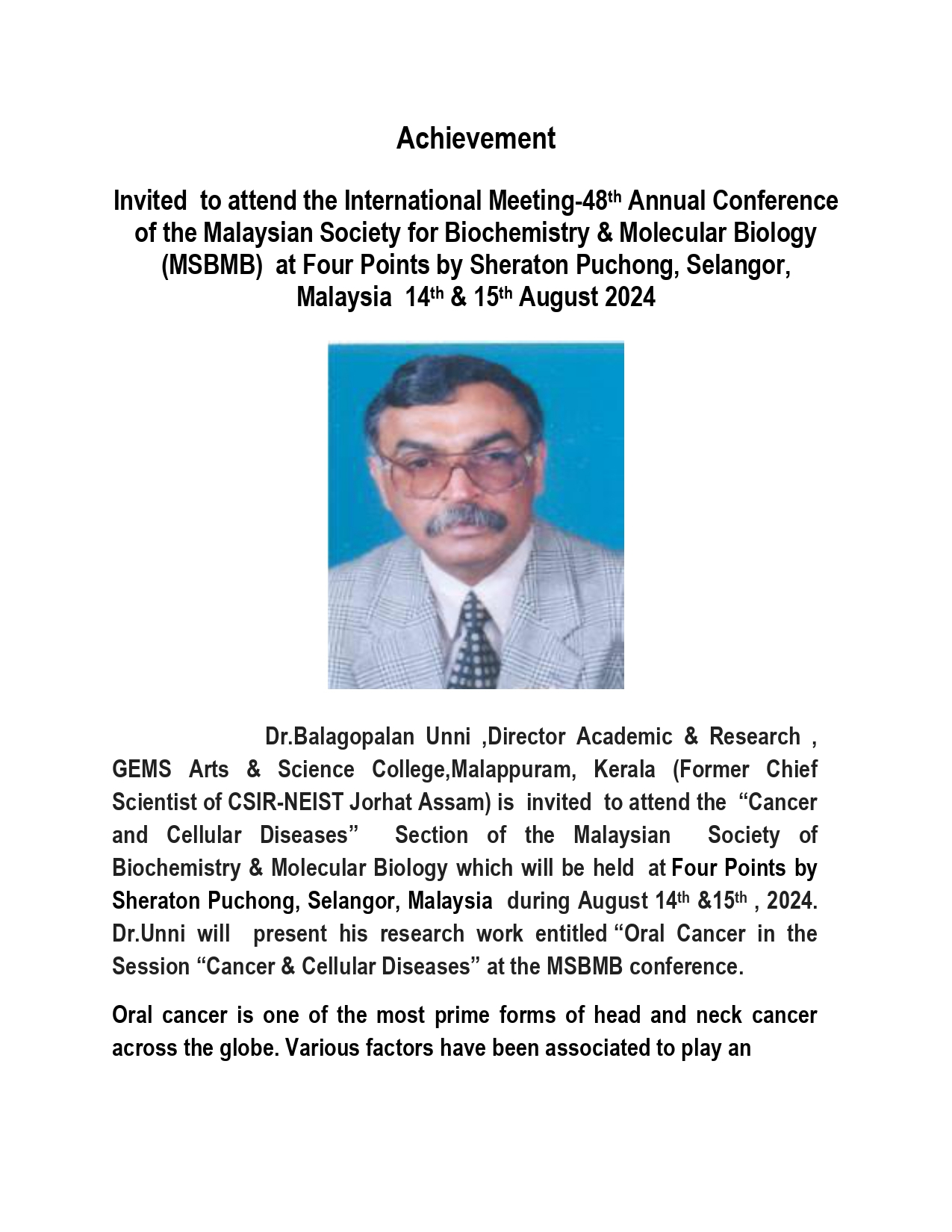
Currently Dr.Unni is the Director Academic & Research at GEMS Arts & Science College (University of Calicut) Kerala, and Adviser Research Assam Downtown University, Guwahati Assam on honorary capacity