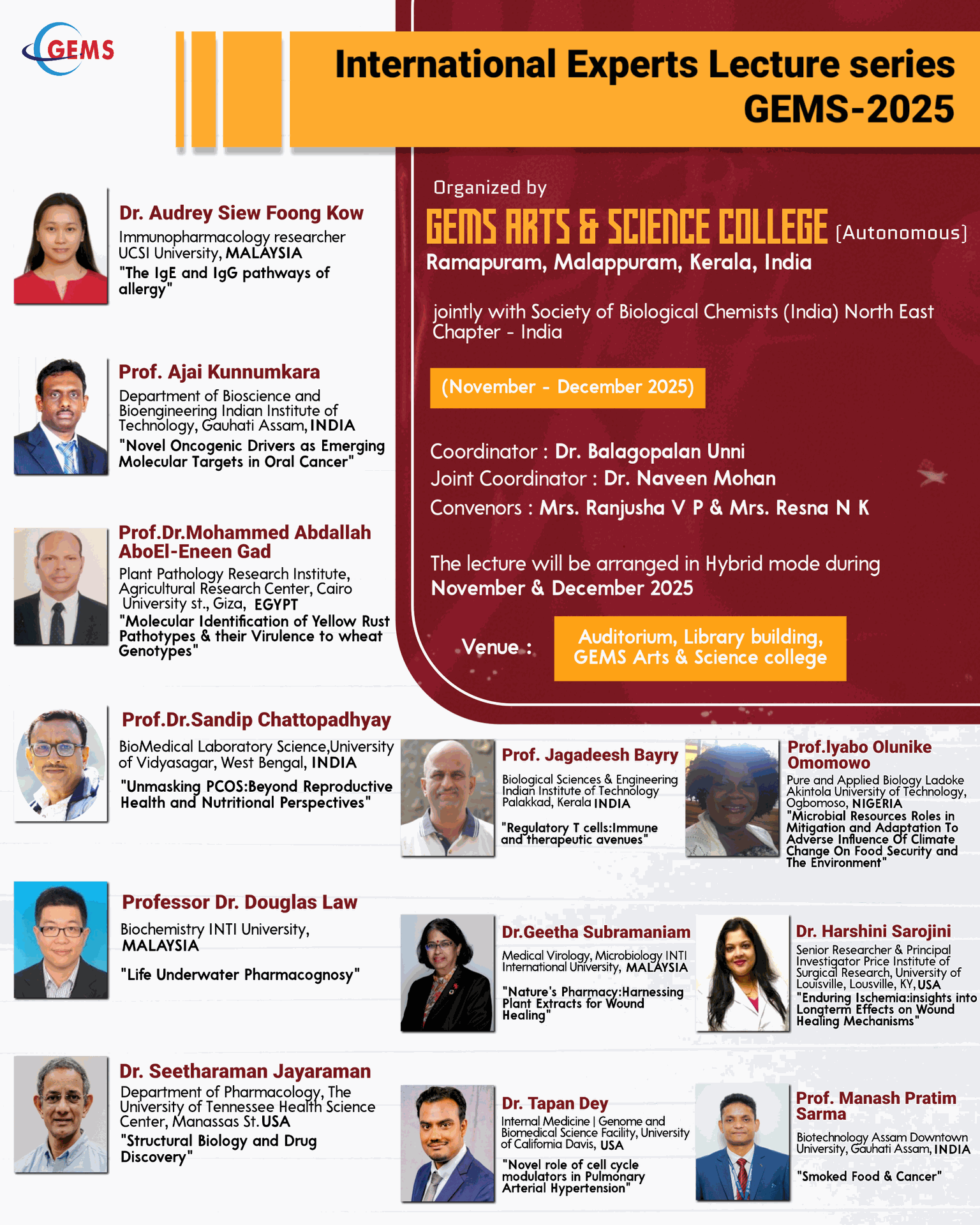
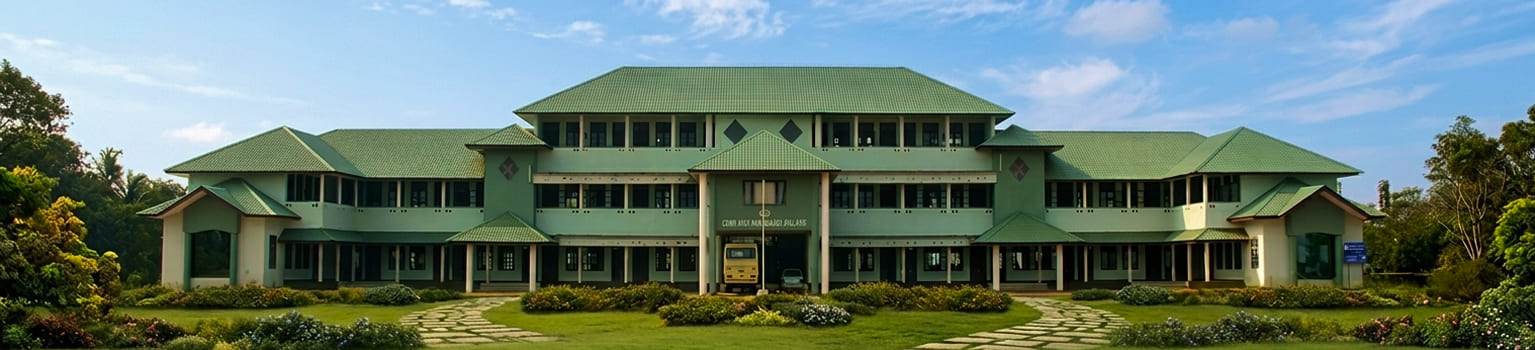
College banner
Workshop on Job Interview Tips

Workshop on Job Interview Tips

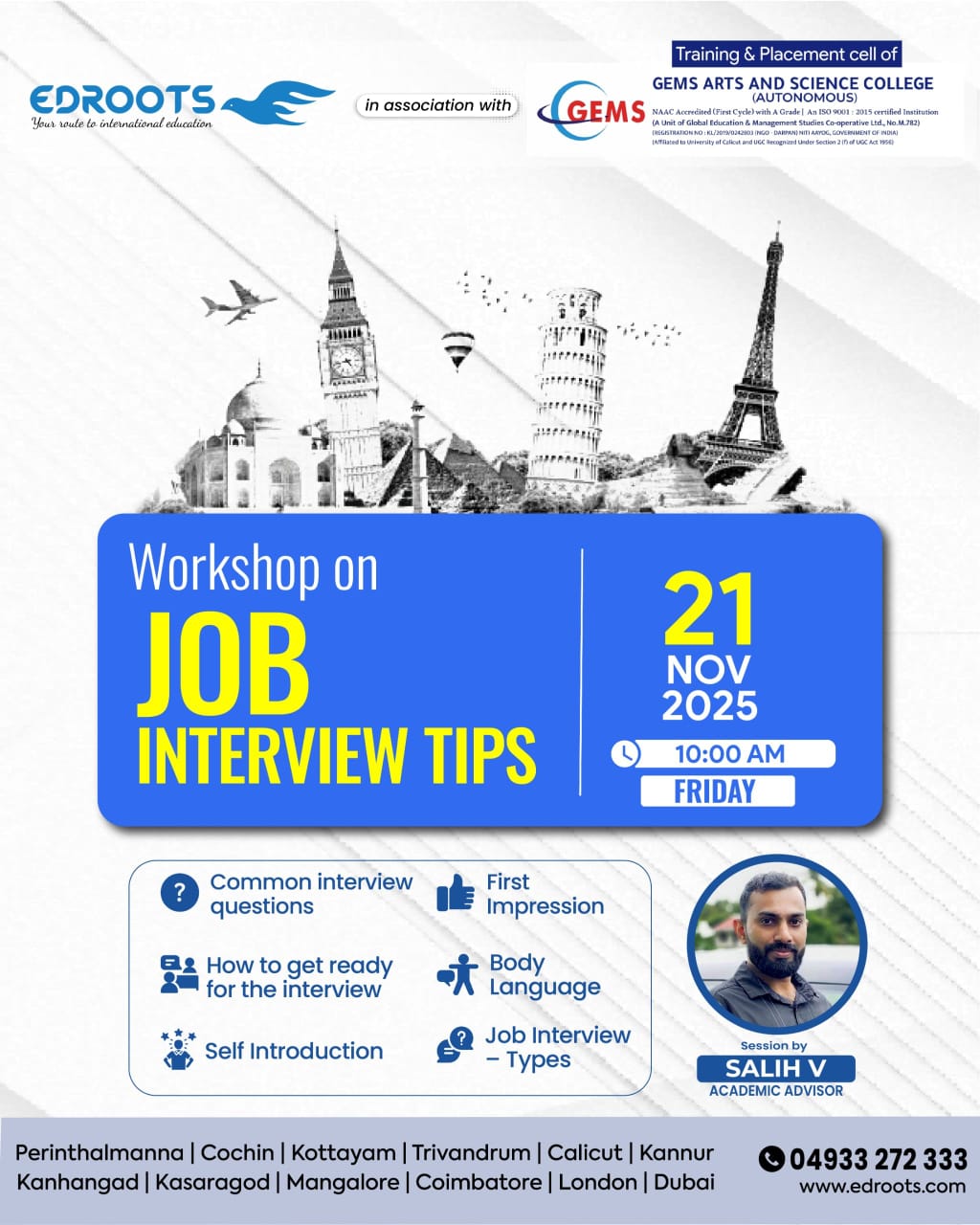
A workshop on Job Interview Tips was conducted for the final-year students of all departments at M. P. Narayan Menon Hall. The programme was organized by the Training & Placement Cell in association with Edroots International, with the aim of preparing students for upcoming placement drives and professional interviews.

The session covered a wide range of essential interview-related topics including common interview questions, self-introduction techniques, first impression skills, body language, types of job interviews, and methods on how to get prepared for an interview. These points provided students with practical and relevant knowledge they can apply in real-world interview situations.

A unique and engaging highlight of the workshop was the inclusion of a mobile gaming activity using Kahoot, which added an interactive learning element to the session. Students enthusiastically participated in the quiz, making the workshop lively and highly engaging. The game-based learning approach helped reinforce key concepts in an enjoyable manner, ensuring active involvement from all participants.

The session was handled by Mr. Salih V, Academic Advisor, who led the workshop effectively by sharing valuable insights, real interview scenarios, and practical strategies. His interactive style and clear explanations made the session highly beneficial for students.

The workshop concluded with positive feedback from the participants, who expressed that the session was interesting, informative, and useful for their career readiness. Overall, the programme successfully achieved its objective of equipping students with the skills and confidence required to face job interviews.

GSI MANGALORE VISIT

GSI MANGALORE VISIT

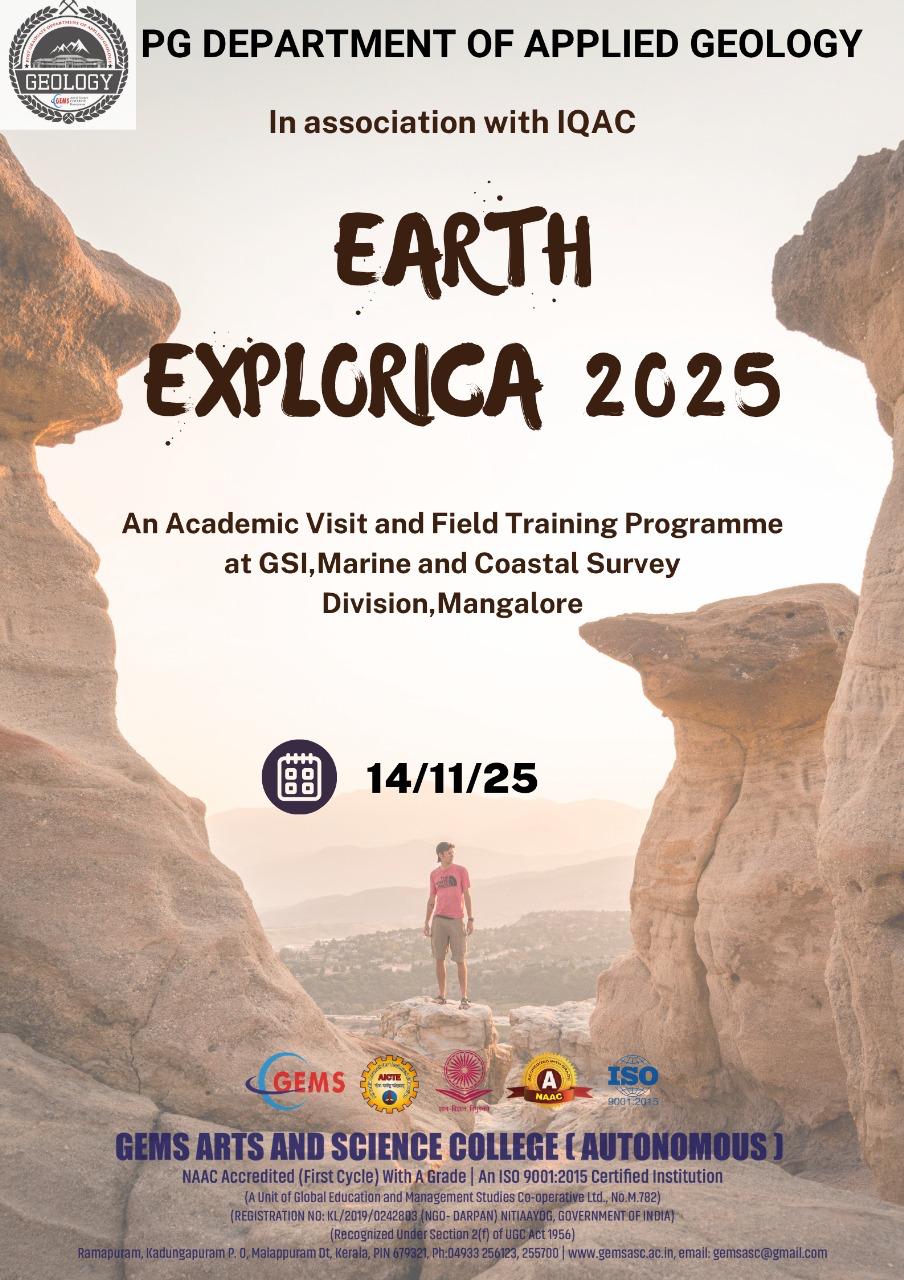
On 14 November 2025, the Post Graduate Geology students of GEMS Arts and Science College (Autonomous), Malappuram, Kerala, visited the Marine & Coastal Survey Division (M&CSD), Geological Survey of India, Mangalore, for a full-day academic exposure programme. The session began at 10:00 AM with a warm Welcome Address by Shri Manoj Kumar K. (TC Division, OpWC-I, M&CSD), followed by an Introductory Speech by Smt Nisha N. V., Director, PSS, M&CSD, after which the visiting students and faculty introduced themselves. A technical lecture on Marine Offshore Activities of GSI was delivered by Shri Manoj R. V., Senior Geologist, providing insights into ongoing marine research initiatives. After a short tea break, Sarmistha Chowdhury, Geologist, led a session on Future Career Paths After M.Sc. Geology, offering guidance on opportunities in academia, industry, and governmental sectors. This was followed by a briefing on St. Mary’s Island by Shri Manoj R. V., and an engaging video playback of various marine activities conducted by M&CSD, along with a lively quiz that encouraged student participation. From 12:30 PM onwards, students were taken for a lab visit to the Sedimentology & PSA Division, led by Smt Nisha N. V., Shri Jasmine V. J., and JTA Geology staff, after which they proceeded for lunch. The post-lunch session included hands-on exposure to the Micropalaeontology & SEM-EDS Laboratory, guided by Shri Manoj Kumar K., Smt Reshma A., Shri Aijandas M., and Smt Sharika Mathew, followed by a visit to the Museum & Core Repository and the Thin Section Preparation Lab under the guidance of Dr. C. V. Gopalan and Shri Jasmine V. J. Students then visited the Chemical Division led by Shri Sagar Jindal and Shri Sahil Singh (Chemist), the Geodata Division led by Angresheme R. Hikare (Senior Geologist), and the Geophysical Division under Shri Sunil Kumar (Geophysicist), gaining practical understanding of analytical techniques, data processes, and geophysical applications. The programme concluded at 4:30 PM with Prize Distribution, Feedback, and a Vote of Thanks delivered by Dr. C. V. Gopalan, Director, along with Shri Soubhik Bhattacharya, marking a highly informative and enriching academic experience for all participants.
“ROCKS & WAVES” AT ST. MARY’S ISLAND, KARNATAKA

“ROCKS & WAVES” AT ST. MARY’S ISLAND, KARNATAKA

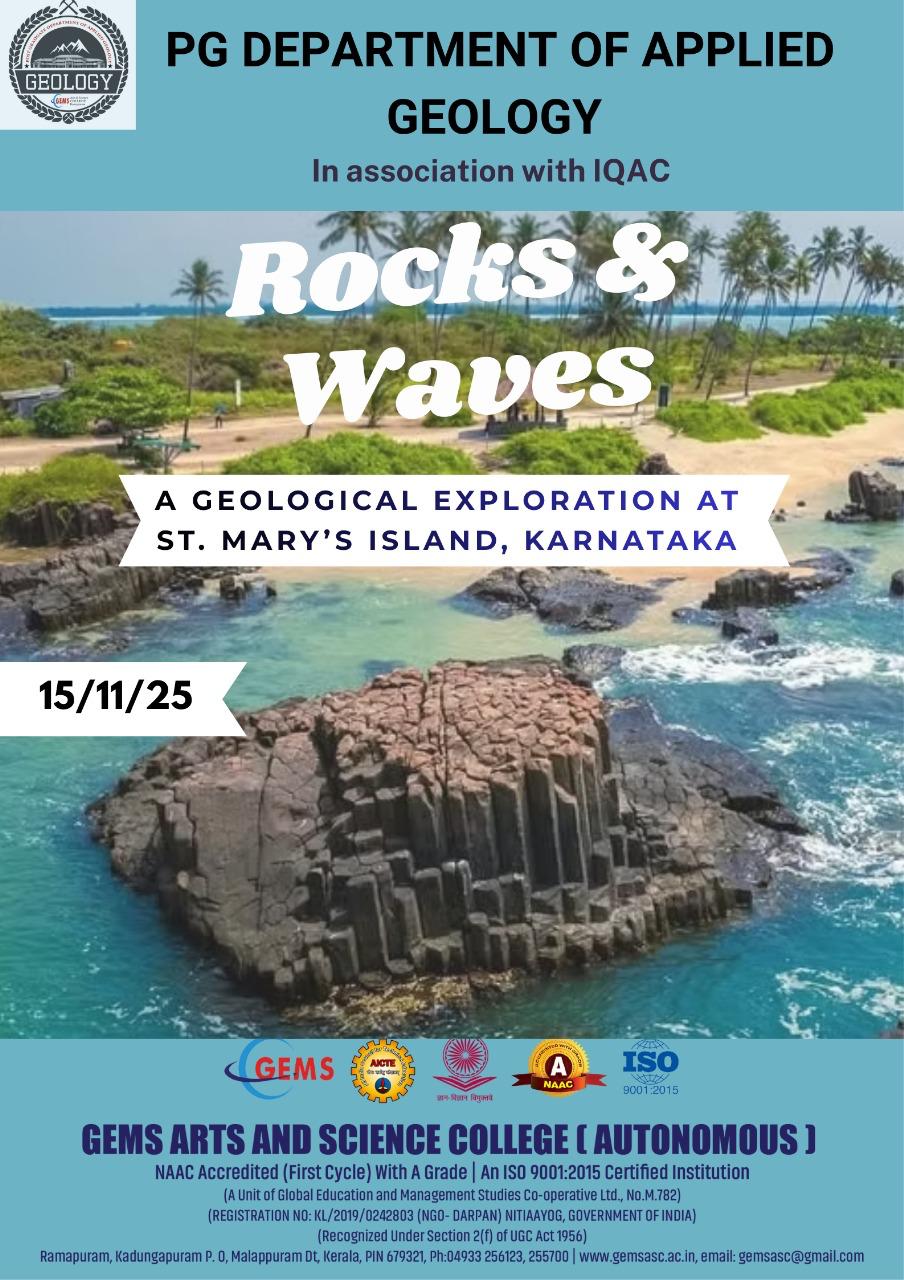
The Post Graduate Department of Applied Geology, GEMS Arts and Science College (Autonomous), Malappuram, in association with IQAC, organized a one-day geological exploration titled “Rocks & Waves” at St. Mary’s Island, Karnataka, on 15 November 2025. The field trip aimed to provide postgraduate geology students with direct exposure to unique geological formations, particularly the famous columnar basalt structures of the island, which serve as an excellent natural laboratory for understanding igneous processes, coastal geomorphology, and the geological evolution of the western coast of India.
The team reached St. Mary’s Island via the Malpe jetty, after which students were guided through various rock exposures, including the striking prismatic jointed basalt, beach sediments, and coastal erosional features. The faculty highlighted the island’s geological significance, believed to be associated with the Deccan Volcanic Province, and explained how rapid cooling of basaltic lava led to the hexagonal columnar jointing seen today. Students closely examined lithology, mineral assemblages, weathering patterns, and the interaction of waves with the rocky shoreline, strengthening their understanding of igneous petrology and coastal processes.
Apart from academic enrichment, the trip also encouraged teamwork, observation skills, and field documentation practices. Photographs, field sketches, sediment descriptions, and structural measurements were recorded as part of experiential learning. The visit proved to be highly informative and enjoyable, offering students a memorable opportunity to connect theoretical knowledge with real-world geological features. The programme successfully met its objective of enhancing field proficiency among postgraduate geology students.

“BHAVISHYA 2025 – PEER TEACHING PEER PLUS

“BHAVISHYA 2025 – PEER TEACHING PEER PLUS

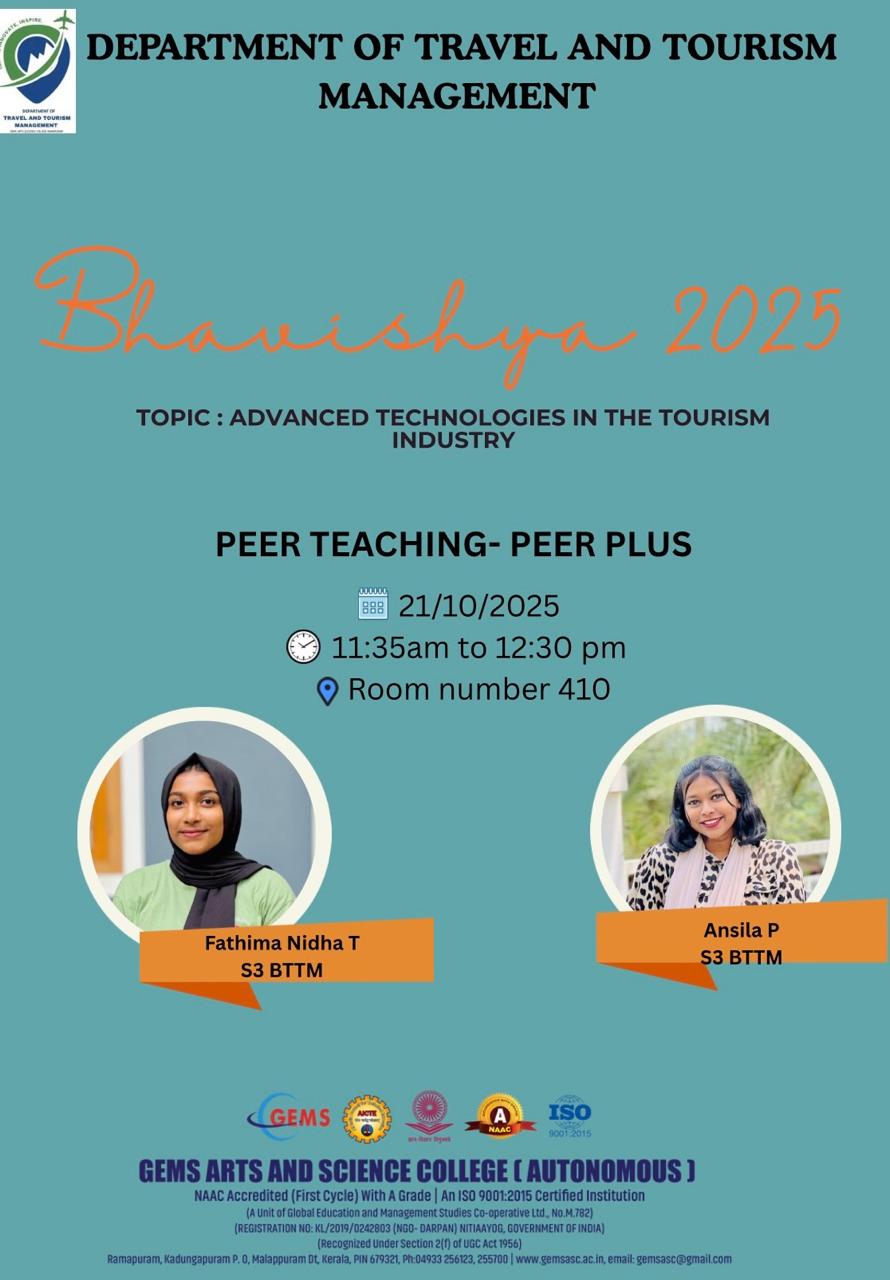
The Department of Travel and Tourism Management organized a Peer Teaching Programme – “Bhavishya 2025: Peer Plus” on 21st October 2025 as part of its academic enrichment activities. The session was conducted from 11:35 AM to 12:30 PM in Room No. 410.
The peer teaching session was handled by Fathima Nidha T and Ansila P, students of 3RD Semester BTTM, on the topic “Advanced Technologies in the Tourism Industry.” The objective of the session was to enhance collaborative learning and to promote student-led knowledge sharing on emerging trends in tourism.
The presenters explained how technological innovations such as Artificial Intelligence, Virtual Reality, Augmented Reality, Internet of Things (IoT), Blockchain, and Smart Tourism Systems are revolutionizing the global tourism sector. They also discussed real-world examples of technology integration in hospitality, travel booking, and destination marketing.
The session was highly interactive, with active participation from students who shared their insights and raised questions about the impact of technology on sustainable tourism and customer experience. The discussion helped participants understand the importance of adopting new technologies for improving efficiency and competitiveness in the tourism industry.
Overall, the Bhavishya 2025 – Peer Plus session was informative and engaging. It provided a valuable platform for students to develop their presentation skills, subject knowledge, and confidence through peer-to-peer learning.

WEBINAR - WORLD WATER DAY

WEBINAR - WORLD WATER DAY

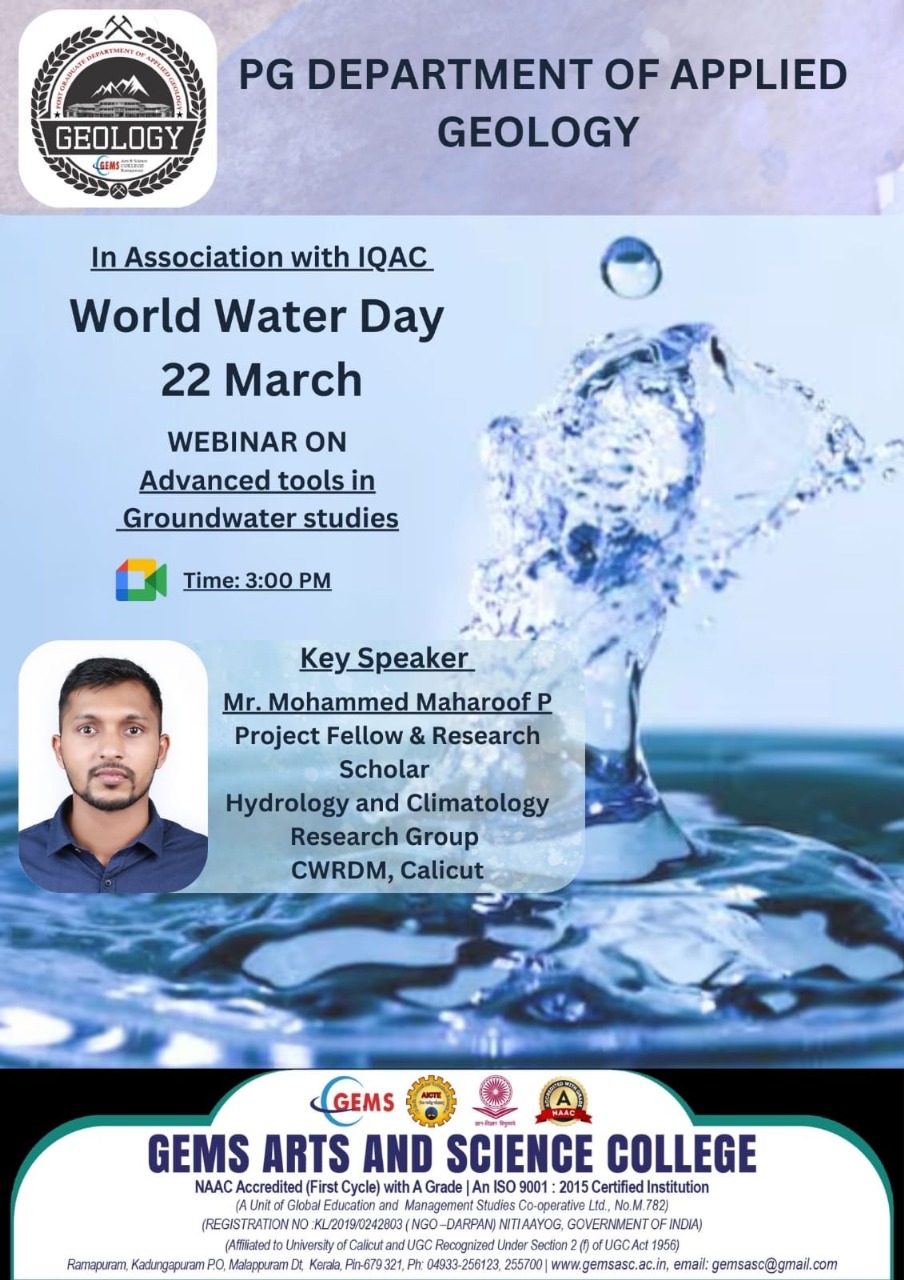
The PG Department of Applied Geology, in collaboration with the Internal Quality Assurance Cell (IQAC), successfully organized a webinar on “Advanced Tools in Groundwater Studies” on March 22, 2025. The session was delivered by Mr. Mohammed Maharoof P, Project Fellow and Research Scholar at the Hydrology and Climatology Research Group, Centre for Water Resources Development and Management (CWRDM), Kozhikode.
The talk provided an in-depth understanding of India’s groundwater resources, addressing key challenges such as increasing water demand, over-extraction, contamination, and the impacts of climate change. Mr. Maharoof elaborated on a range of modern hydrogeological tools and techniques, including remote sensing, GIS mapping, geophysical surveys (resistivity and seismic methods), isotope hydrology, and numerical groundwater modeling, emphasizing their importance in groundwater exploration, monitoring, and sustainable management.
He also explained the structure and functioning of aquifer systems, groundwater flow dynamics, water quality assessment methods, and artificial recharge techniques aimed at promoting long-term water conservation. Using case studies, satellite imagery, and real-world examples, the speaker demonstrated how advanced technologies are applied to identify groundwater potential zones, detect contamination sources, and predict future water availability under changing environmental conditions.
The webinar was attended by 59 participants, including postgraduate students and faculty members, who actively participated in the interactive discussions. Participants raised insightful questions on groundwater management strategies, technological innovations, and career prospects in hydrogeology, to which Mr. Maharoof provided detailed and practical responses.
The session concluded with a vote of thanks proposed by Ms. Ayishath Juvyria, Assistant Professor, Department of Geology, who expressed sincere appreciation to the resource person for sharing his expertise and to the participants for their enthusiastic involvement.
Overall, the webinar proved to be a highly informative and thought-provoking session, underlining the importance of integrating advanced scientific tools in groundwater studies to address the emerging water crisis and ensure sustainable water resource management in the future.

Webinar on “Glacier Retreat

Webinar on “Glacier Retreat

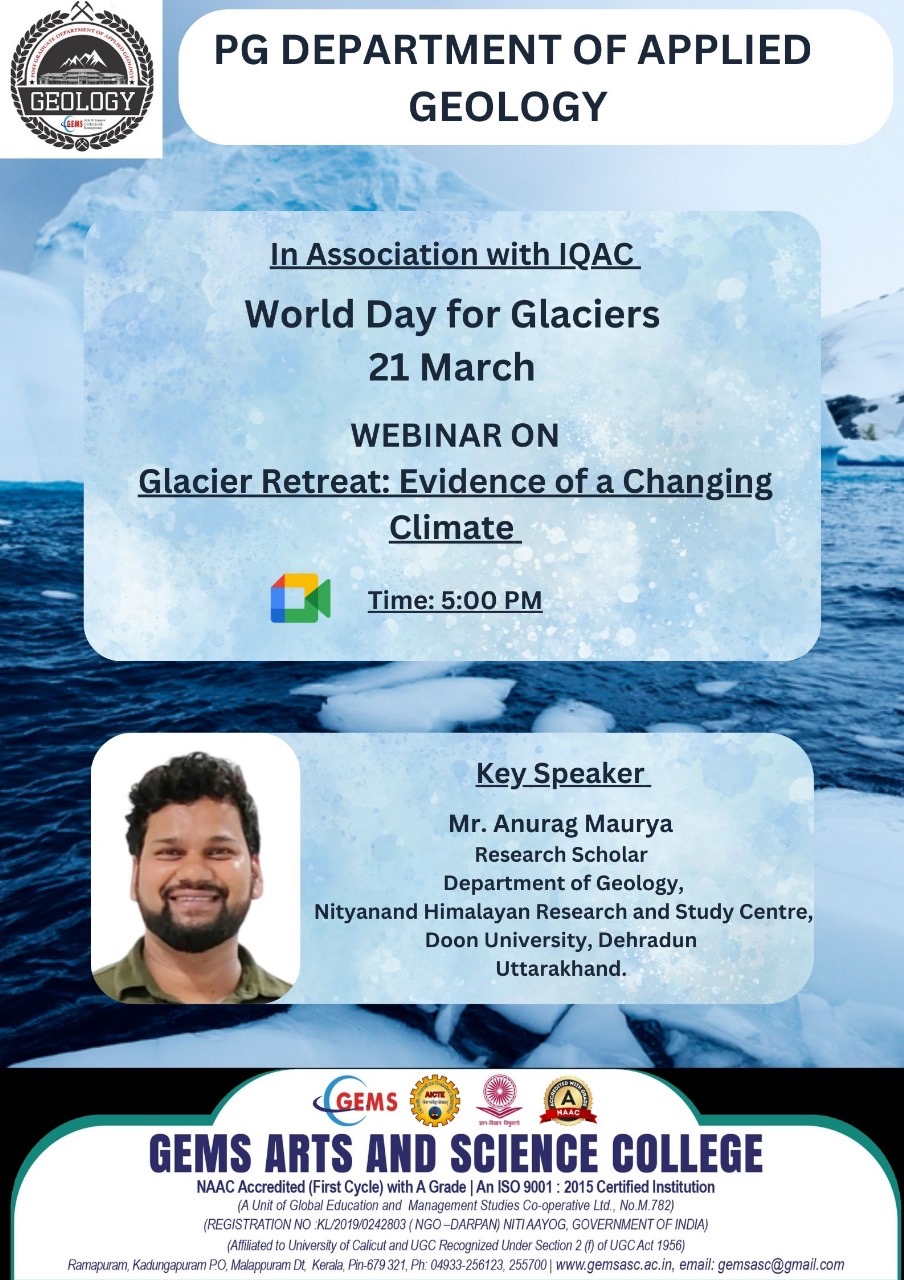
The PG Department of Applied Geology, in collaboration with the Internal Quality Assurance Cell (IQAC), organized a webinar on “Glacier Retreat: Evidence of a Changing Climate” on March 21, 2025, to commemorate the World Day for Glaciers. The session was delivered by Mr. Anurag Maurya, Research Scholar from the Department of Geology, Nityanand Himalayan Research and Study Centre, Doon University, Dehradun.
Mr. Maurya’s presentation offered a comprehensive overview of glaciers as key indicators of climate change, emphasizing their critical role in maintaining global water balance and regulating Earth’s climate systems. He explained how global warming, altered precipitation patterns, and increasing human interventions have accelerated the rate of glacier retreat across various regions, particularly in the Himalayas.
Using satellite imagery, long-term research data, and field evidence, he illustrated the alarming decline of glaciers over the past decades and the associated impacts on freshwater availability, biodiversity, and regional ecosystems. The talk also shed light on the potential hazards of glacial lake outburst floods (GLOFs) and rising sea levels, both of which pose serious risks to vulnerable populations and coastal communities.
Mr. Maurya further discussed the scientific methods used in glaciology, such as remote sensing, field surveys, and climate modeling, underscoring their importance in monitoring, predicting, and mitigating the effects of glacier retreat.
The webinar witnessed active participation from 56 attendees, including postgraduate students and faculty members, who engaged enthusiastically in the interactive Q&A session. Participants raised thoughtful queries on climate mitigation strategies, glacial dynamics, and research opportunities in the field of cryospheric studies, which were addressed in detail by the resource person.
The session concluded with a vote of thanks delivered by Mr. Abdul Rahman C.V., Head of the Department of Geology, who expressed heartfelt gratitude to the speaker for his enlightening presentation and to the participants for their keen involvement.
Overall, the webinar proved to be a highly informative and thought-provoking session, successfully highlighting the urgent need for global climate action and continued research on glacier retreat to safeguard Earth’s delicate environmental balance.